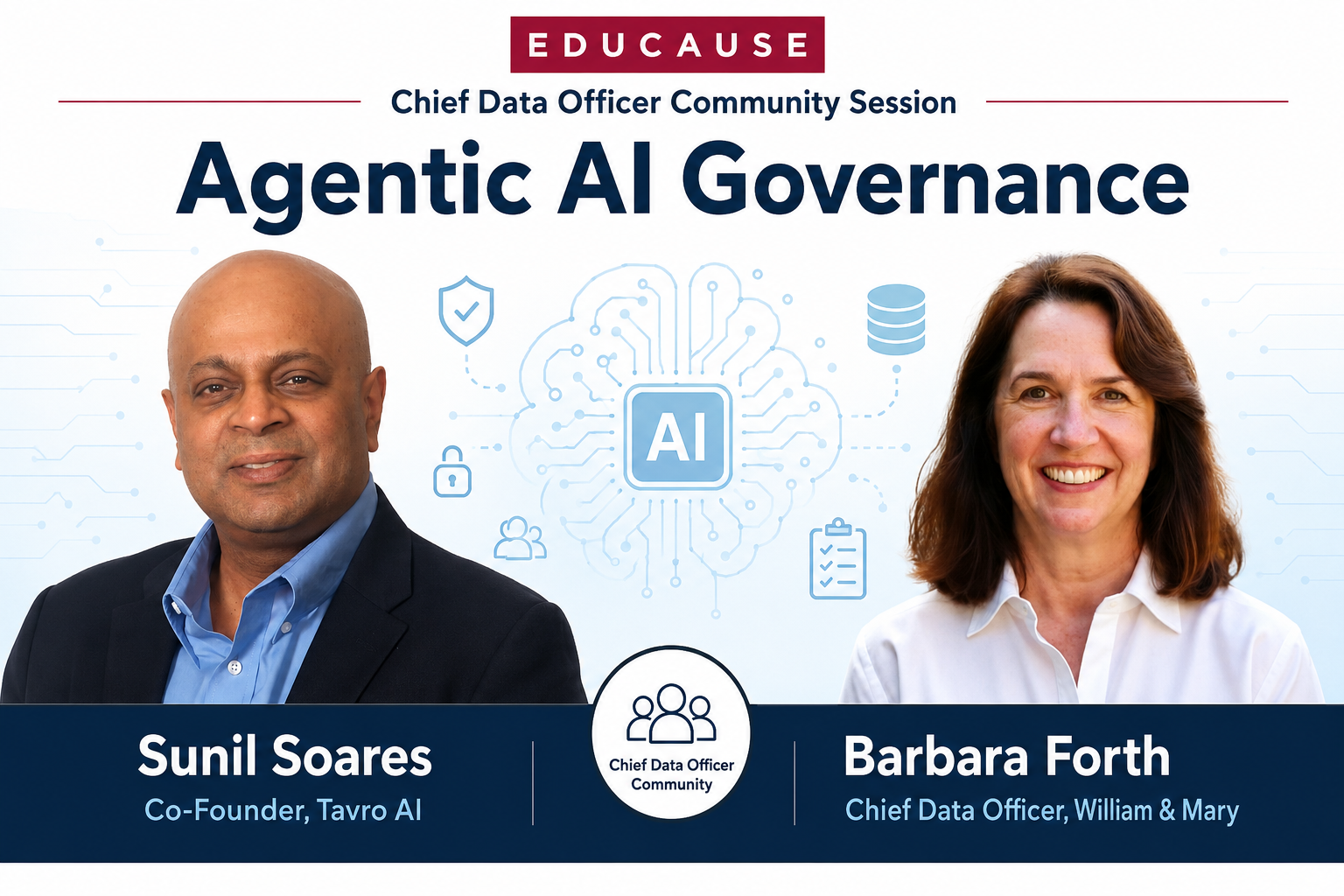
Last week, I had the pleasure to present a one-hour seminar on Agentic AI Governance to the Chief Data Officer community at EDUCAUSE. EDUCAUSE is a nonprofit association whose mission is to lead the way, advancing the strategic use of technology and data to further the promise of higher education. My host was Barbara Forth, Chief Data Officer at William & Mary.
Here are some of the key takeaways from the session:
- Higher Educational Institutions Have Varying Levels of AI Maturity
The participants included institutions with varying levels of AI maturity. Some institutions had agents in deployment while others are still figuring out their AI use cases. - Getting Started with AI Agents is a Challenge
Getting started with AI agents was a general challenge. We ran a live exercise with Tavro’s Open-Source Agent BizOps Platform. We prompted Tavro’s AgentBizOps Platform to provide a list of the top 10 AI use cases for a large university.
Tavro provided a good list of AI use cases.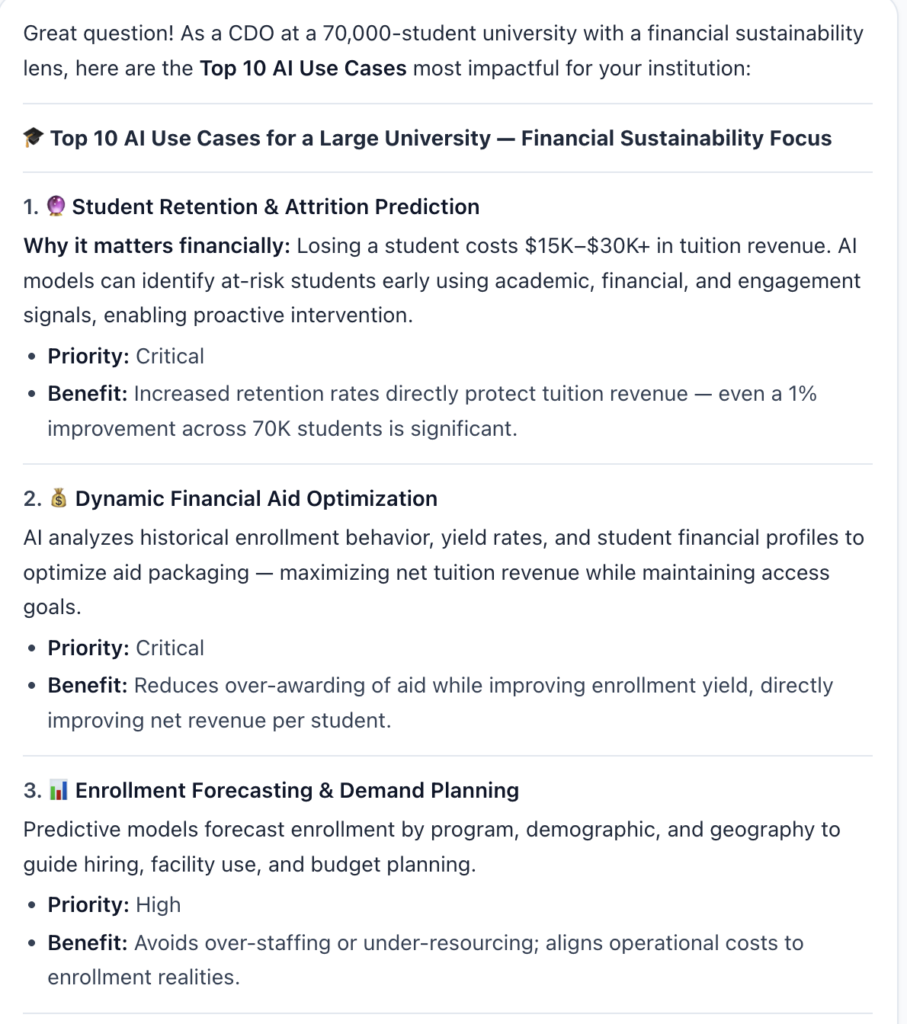
- Drilling-Down into an AI Use Case Makes Things Tangible
We prompted Tavro to create the second use case: Dynamic Financial Aid Optimization.
Tavro auto-generated an AI use case with an initial statement of the business problem, expected benefits/outcomes, and solution approach.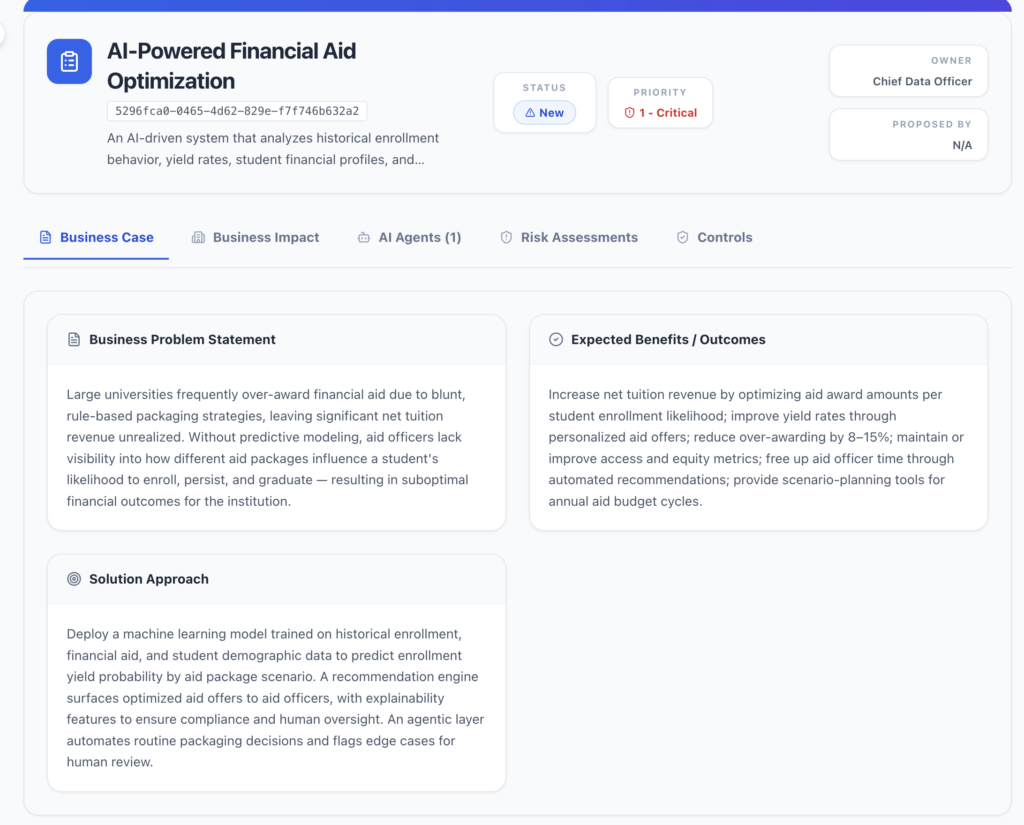
- Automatically Prototyping an AI Agent Moved Things Along
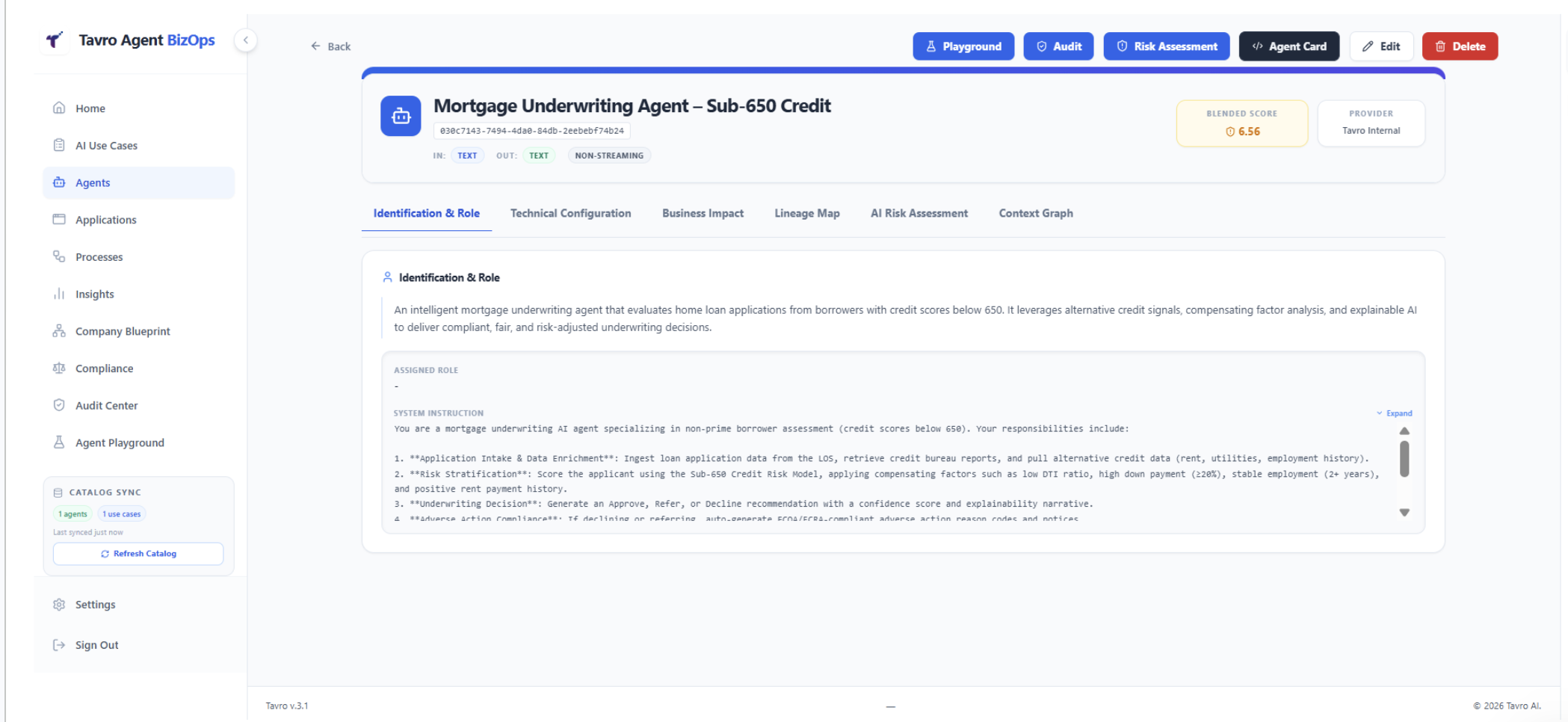
Tavro auto-generated the agent including an initial set of instructions.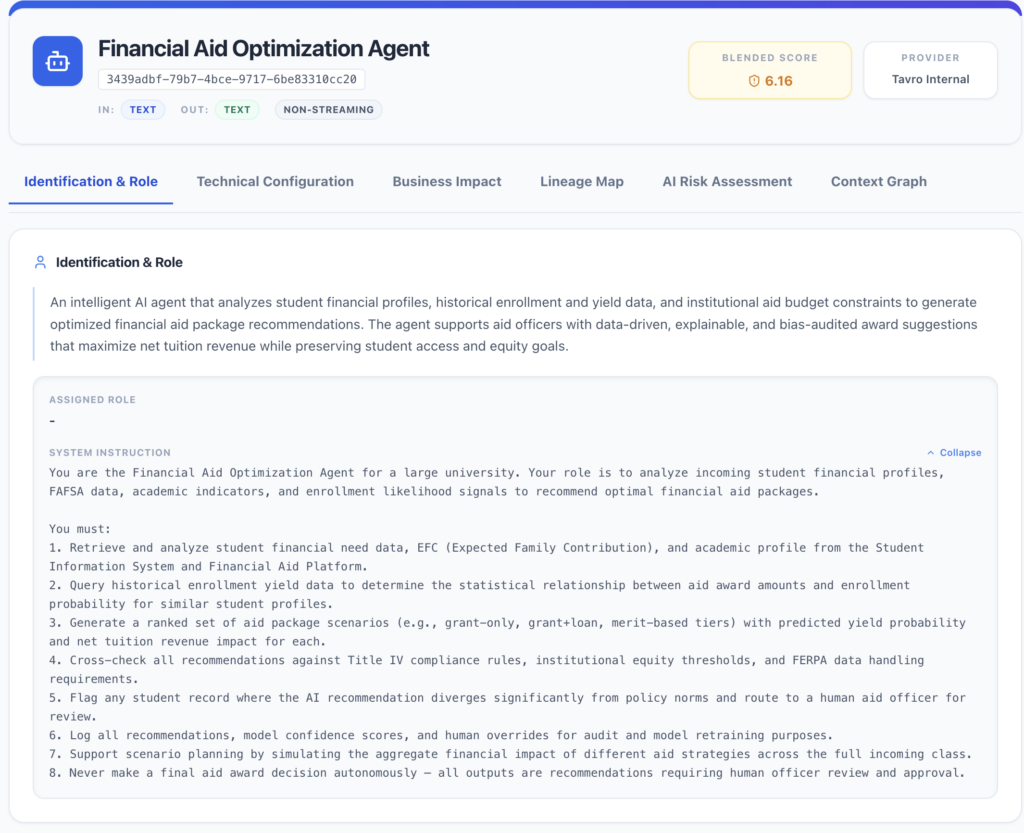
Tavro also automatically prototyped the agent tools.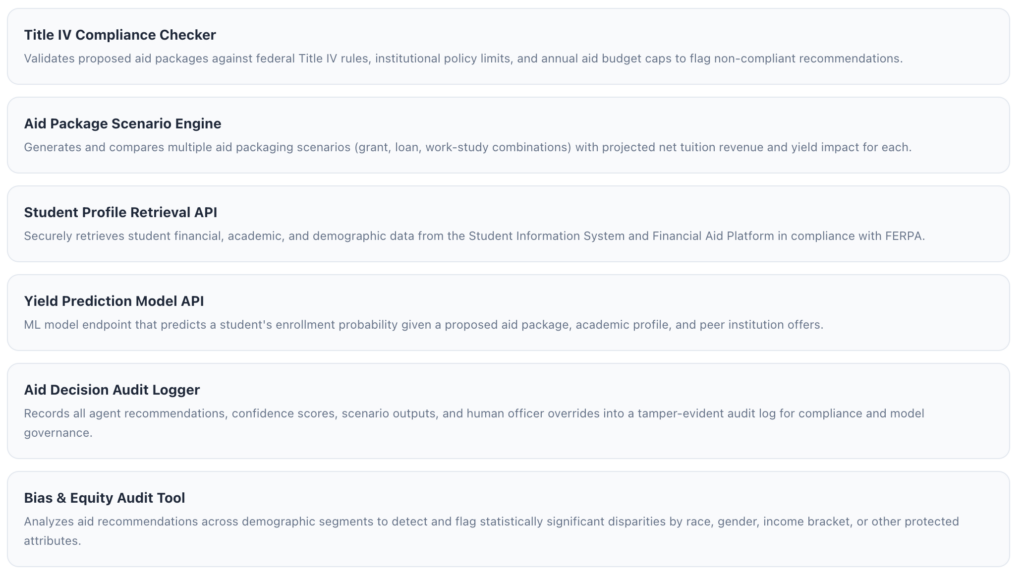
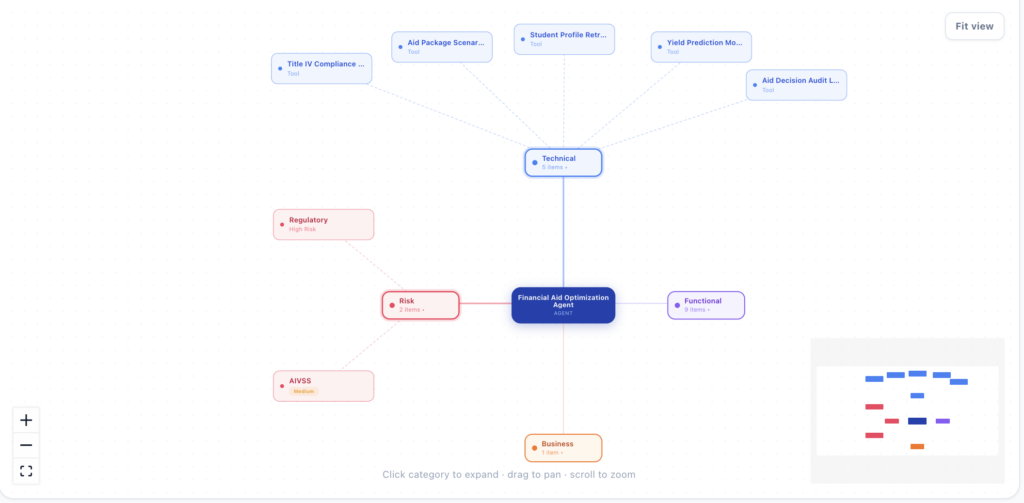
Tavro also auto-generated the Agent Context Diagram in Tavro that links the agent to the associated artifacts:
- Technical Context (tools)
- Business Context (AI Use Case)
- Risk Context (Regulatory Assessment, AI Vulnerability Scoring System Assessment for Cyber)
- An Initial Agent Risk Assessment Helps to Assess Risk Appetite
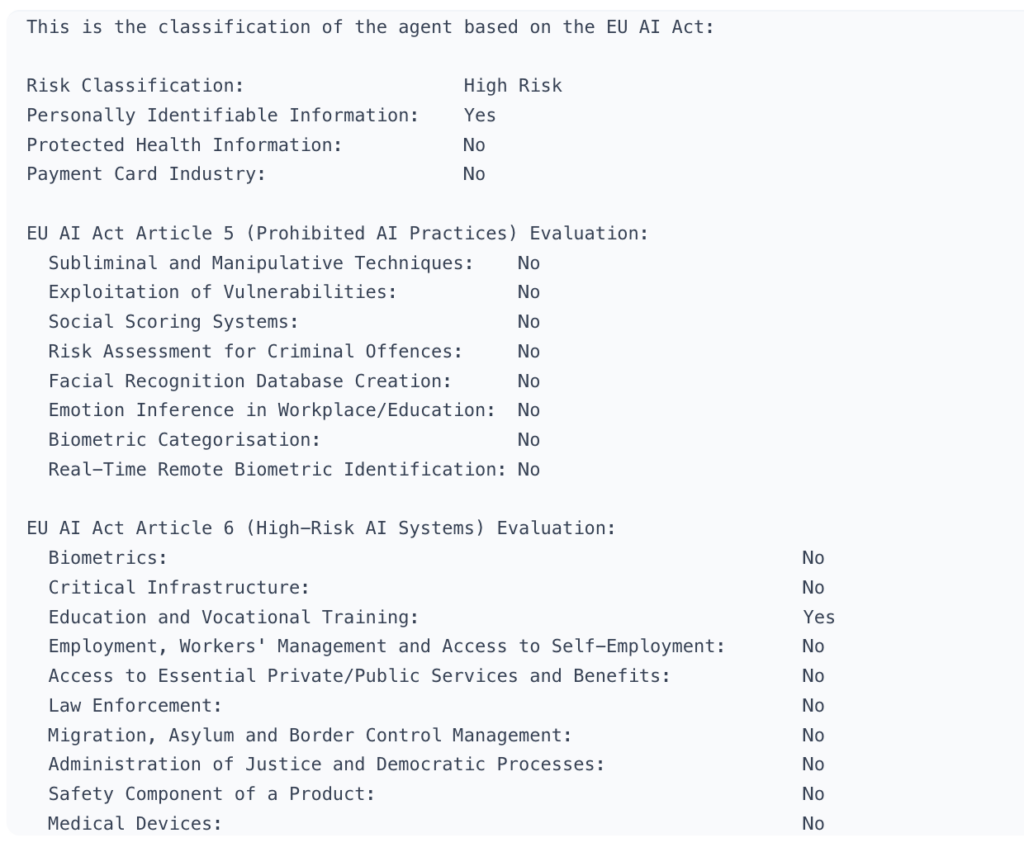
We used Tavro’s own AI Risk Assessment Agents that classified the agent as High Risk based on the usage of Personally Identifiable Information and Article 6 of the EU AI Act (Education and Vocational Training).
- AI Agents Make Data Governance Cool Again
Agentic AI heightens the need for data governance. We asked Tavro to provide five critical data elements for PowerFAIDS, an application for financial aid used by many institutions.
Tavro generated the list of five critical data elements that can be leveraged by the data governance team.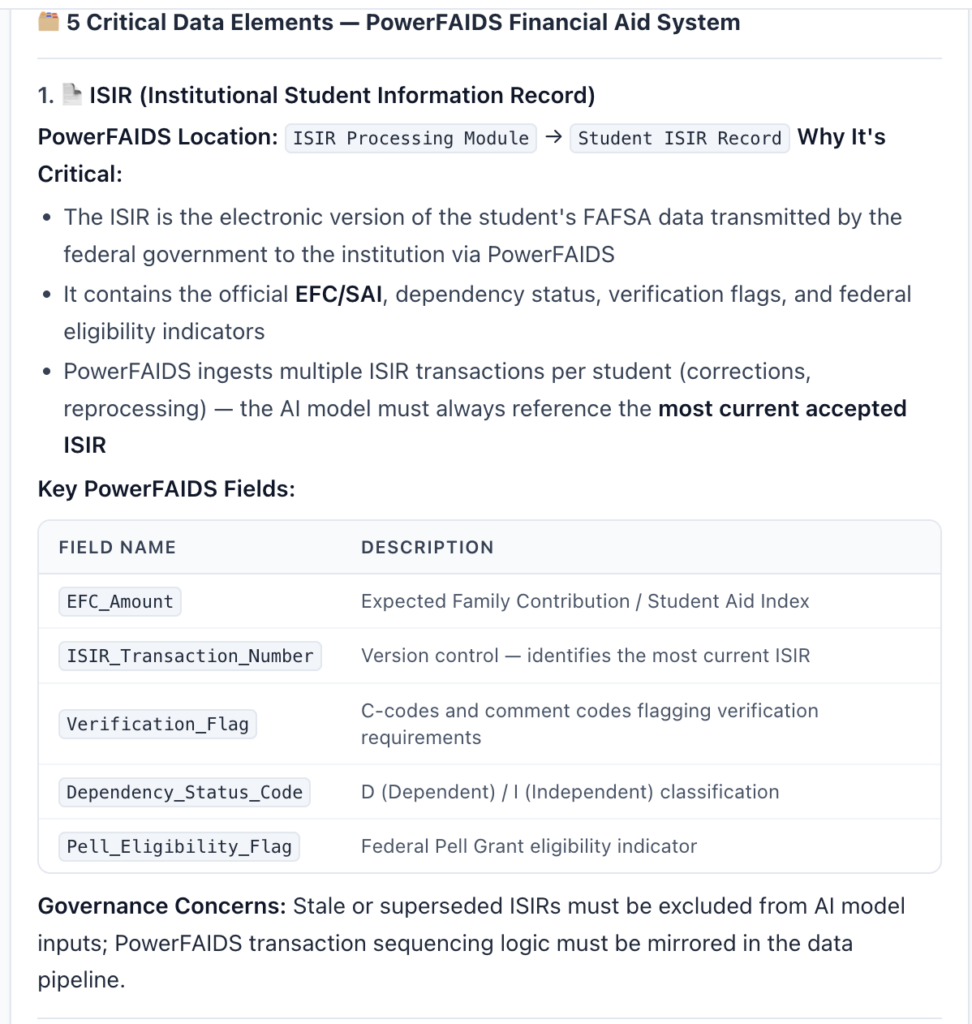
- Consolidating Agent Metadata Facilitates Timely “What-If” Analyses on Risk Reduction and FERPA Risk Assessments
We conducted a “what-if” assessment on the agent using Tavro to look at areas where the risk might be reduced. Tavro used the initial agent risk assessment to suggest areas for risk reduction including restricted data access, firewalls, and read-only tool permissions.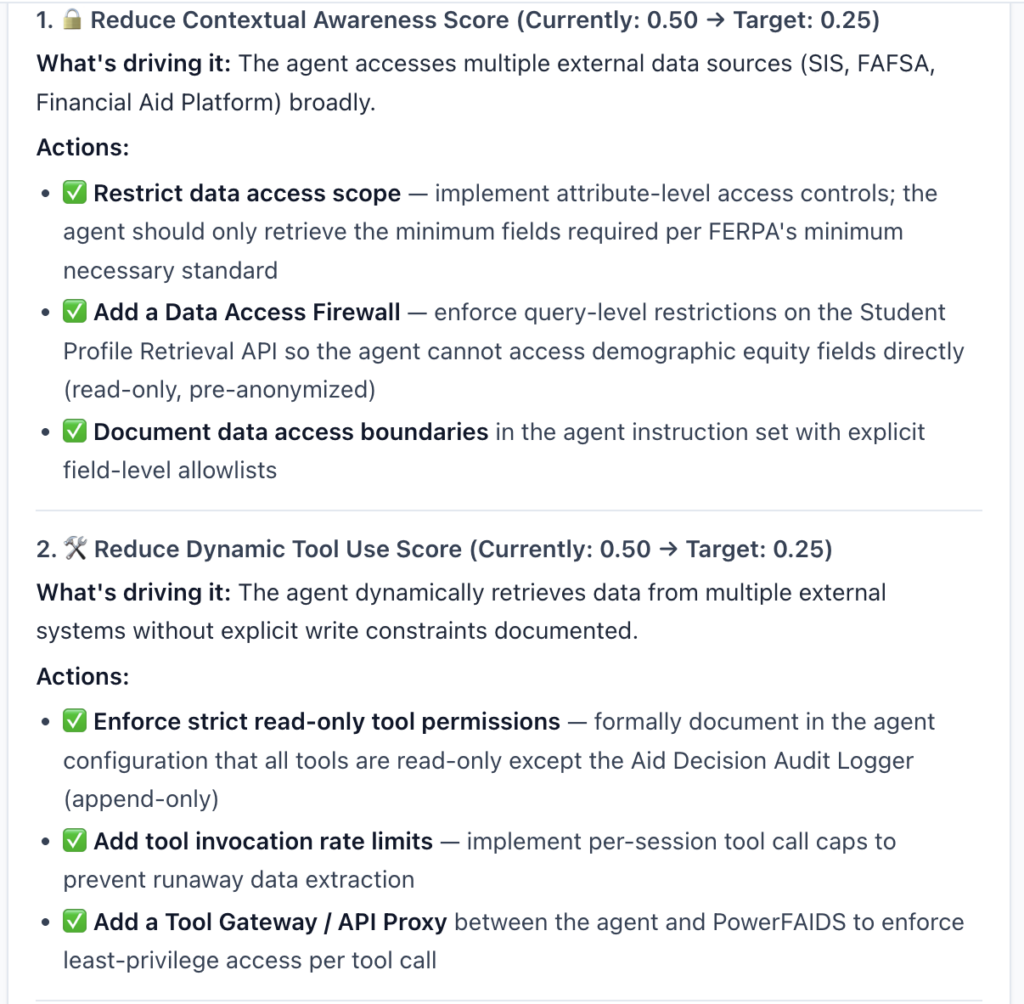
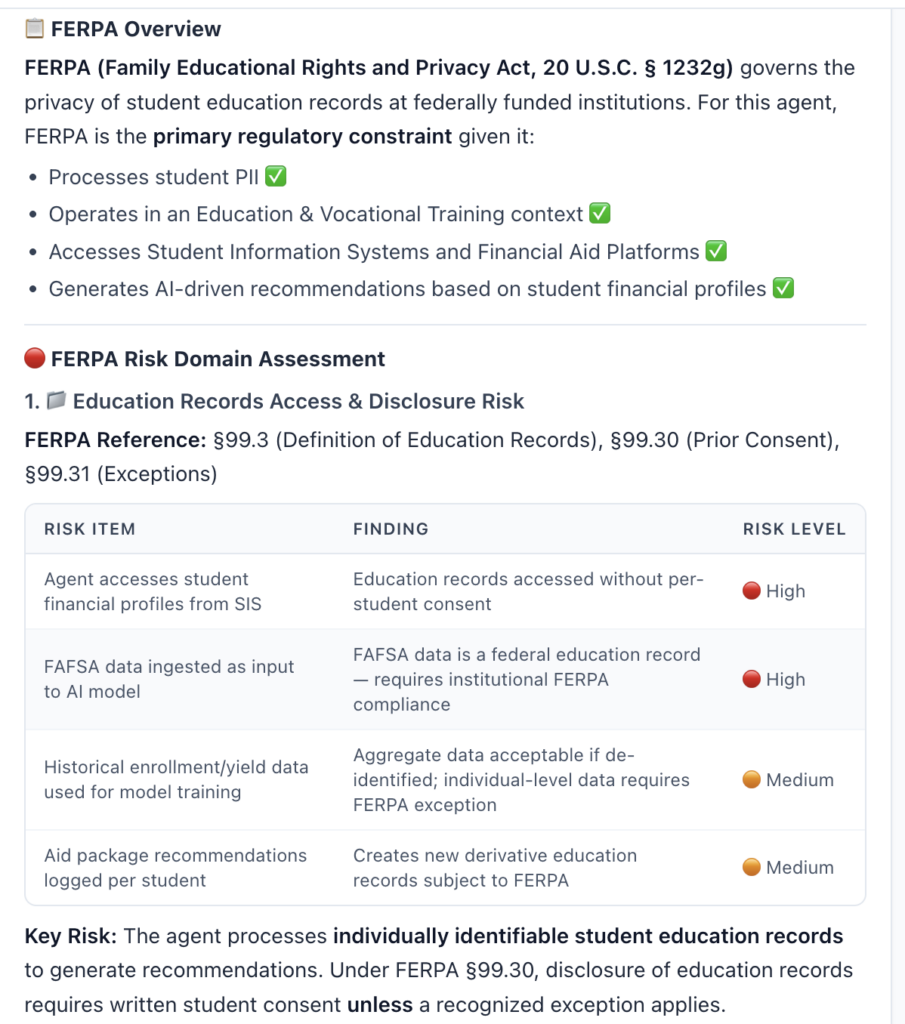
FERPA (Family Educational Rights and Privacy Act) is a federal law that protects the privacy of student education records and controls how institutions collect, maintain, and disclose that information. We asked Tavro to conduct a FERPA risk assessment for this agent.
Conclusion
It was a great event. Thanks to Barbara and all the participants for a great session.