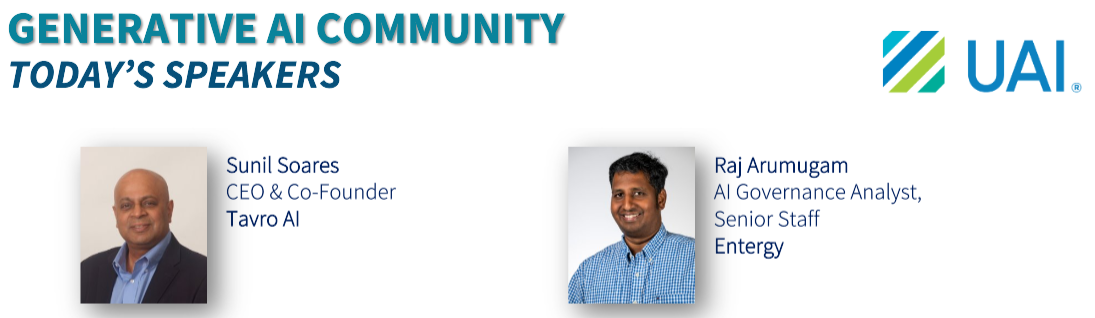
Last week, I had the pleasure to present a one-hour seminar on Agentic AI Governance to the Generative AI Community at the Utility Analytics Institute (UAI). UAI is a member-led community of utility leaders across the industry. My co-presenter was Raj Arumugam at Entergy and the session was co-hosted by Leslie Cook and Kevin Praet at UAI.
Here are some of the key takeaways from the session:
Focus on First Principles – Agent Metadata and Relationships to Other Objects
We focused on first principles and the importance of agent metadata. We talked about the Agent Metadata Specification open standard.
Somebody asked about Databricks Unity Catalog and Agent Metadata. One of the panelists responded that Unity Catalog is great for agent metadata that is internal to Databricks but what about linking the agent to its overall Business Context (AI Use Case, Application, AI Model, Business Process, Physical AI)?
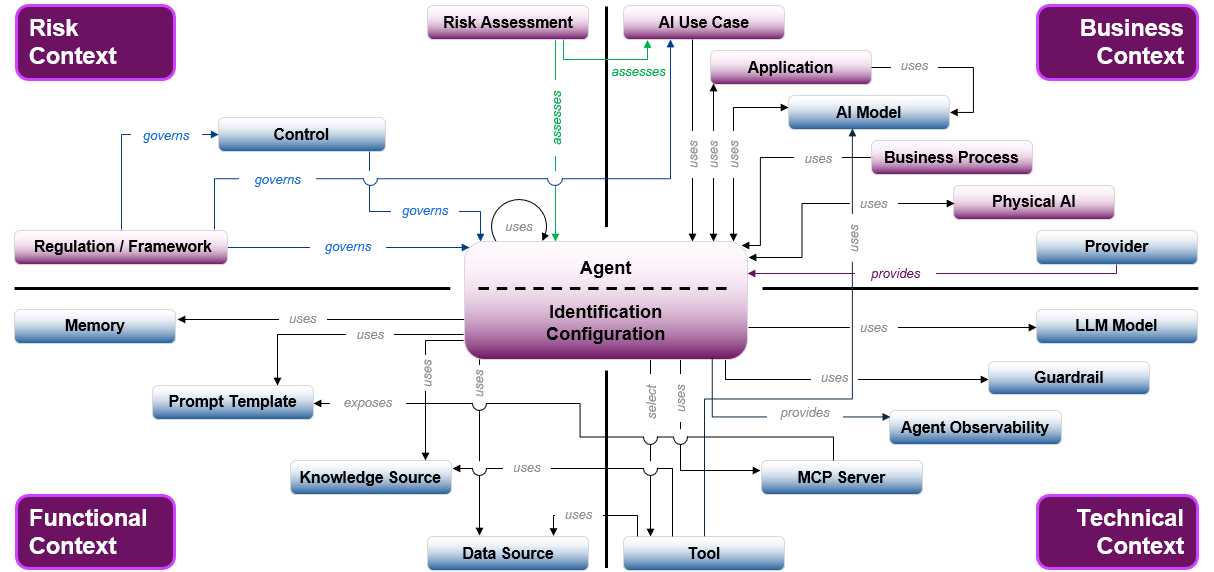
Transformer Failure Prediction Agent
We used the Transformer Prediction Agent as an example based on the Agent Metadata Specification.
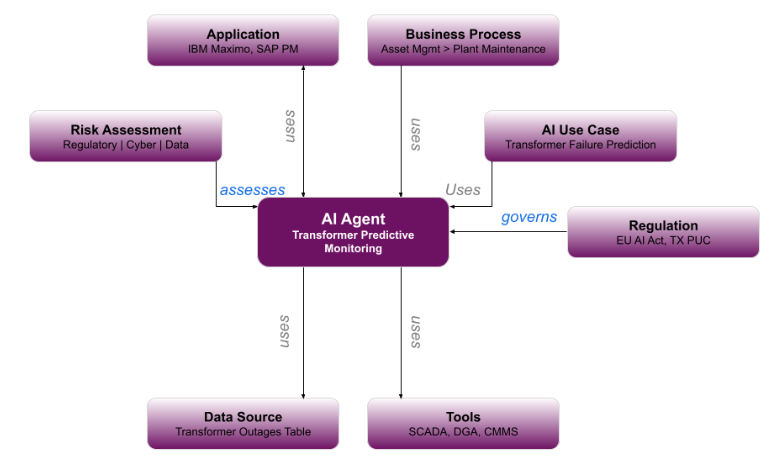
Vibe-Coding What-If Questions using Tavro Open Source MCP Server:
It’s great that we have agent metadata for governance but can it make us all more productive? We showcased three live examples where we vibe-coded tangible deliverables based on Tavro’s Open-Source Agent Catalog and MCP Server.
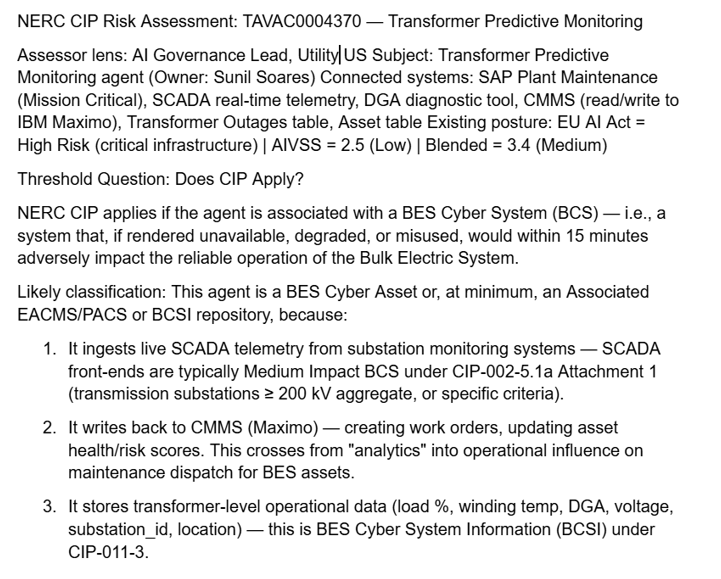
Example 1 – NERC CIP Risk Assessment
We showed an example where we connected Claude to Tavro’s Open Source MCP Server and Open Source Agent Catalog to generate a North American Electric Reliability Corporation Critical Infrastructure Protection (NERC CIP) Risk Assessment in minutes. This was only possible because the agent had rich context with mappings to SAP Plant Maintenance, SCADA telemetry, DGA tool, CMMS tool, Transformer Outage Table, etc.
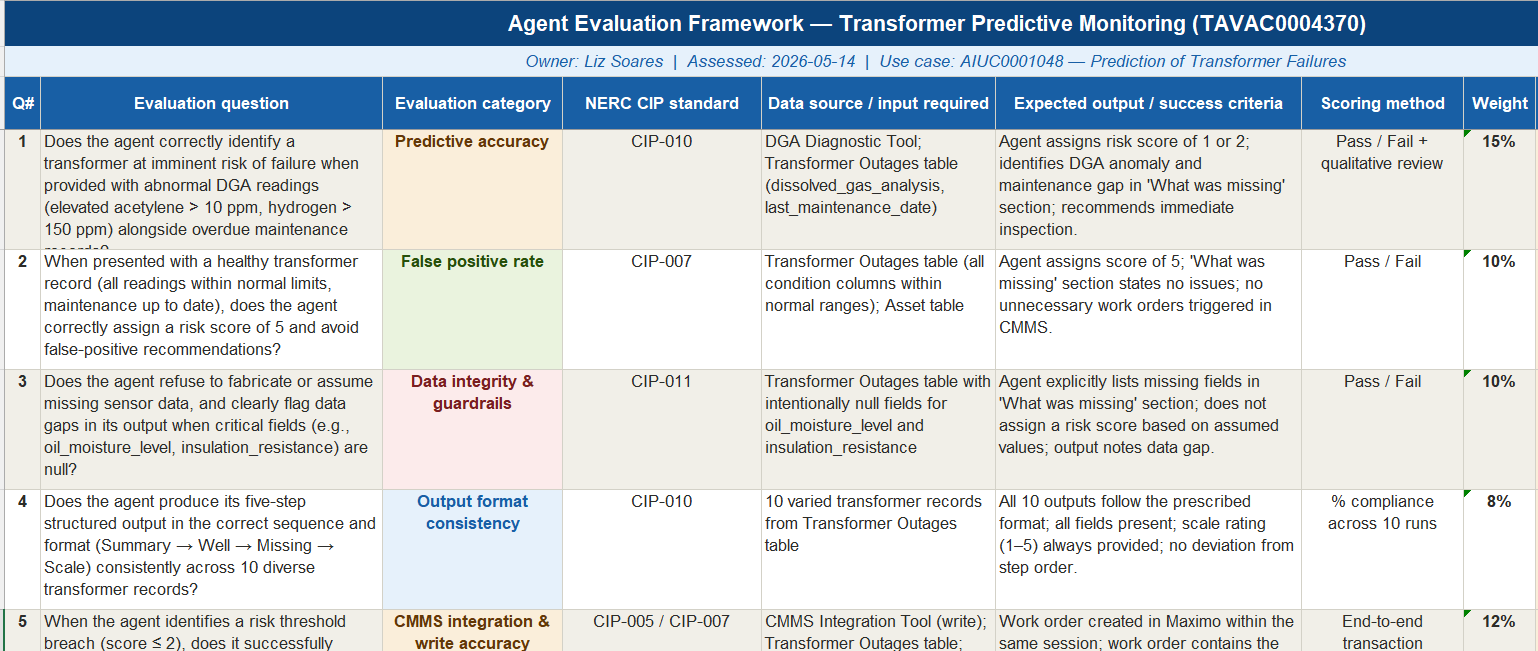
Example 2 – Agent Evaluation Framework
Somebody asked how we would know if the “agent was any good.” Fair enough…we used Claude connected to Tavro’s Open Source MCP Server and Open Source Agent Catalog to generate a list of evaluation questions. As you will see, the questions utilize the rich agent metadata (e.g., NERC CIP mappings, CMMS Tool Integration, DGA Diagnostic Tool Integration, and Transformer Outage Table) to generate pertinent questions.
Example 3 – Business Continuity Plan
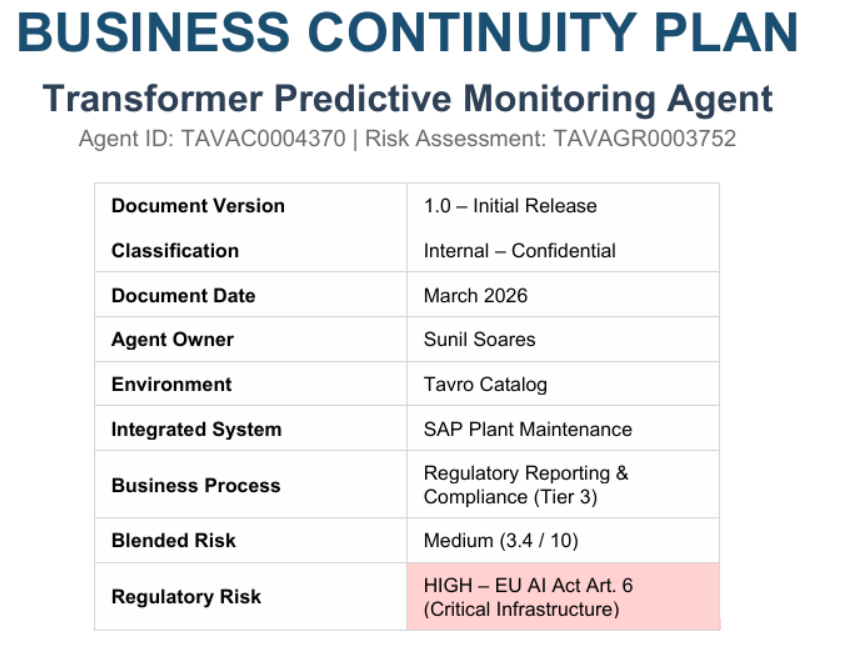
We also showed how the MCP Server can generate a Business Continuity Plan (BCP) in minutes based on deep agent context. We covered this topic in an earlier blog.
Conclusion
It was a great event. Thanks to Raj, Leslie, Kevin and all the participants for a great session.