Key Risk Indicators (KRIs)
A key risk indicator (KRI) is a metric for measuring the likelihood that the combined probability of an event and its consequences will exceed the organization’s risk appetite.
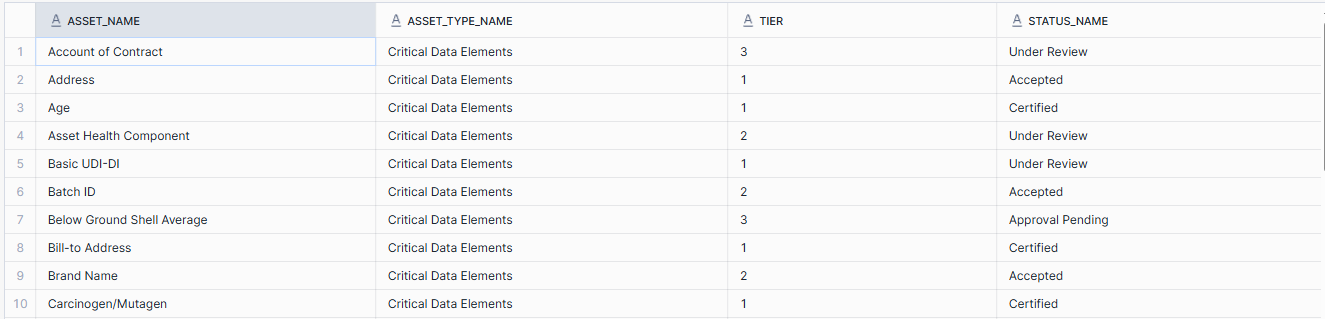
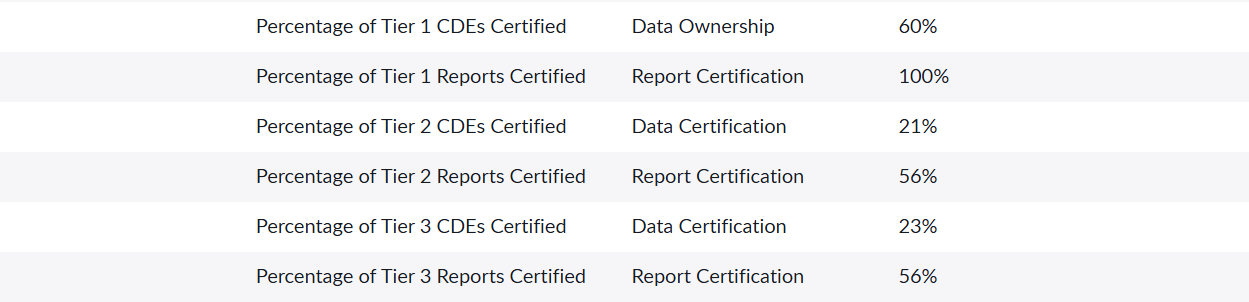
KRIs are a foundational element in any data risk program. For example, the percentage of Tier 1 / 2 / 3 Certified Critical Data Elements and Certified Reports are examples of KRIs (see figure above from Tavro).
A drilldown of the Percentage of Tier 1 CDEs Certified KRI shows a mapping in Tavro to the Risk_14.7 – Inadequate metadata management risk from the risk register. 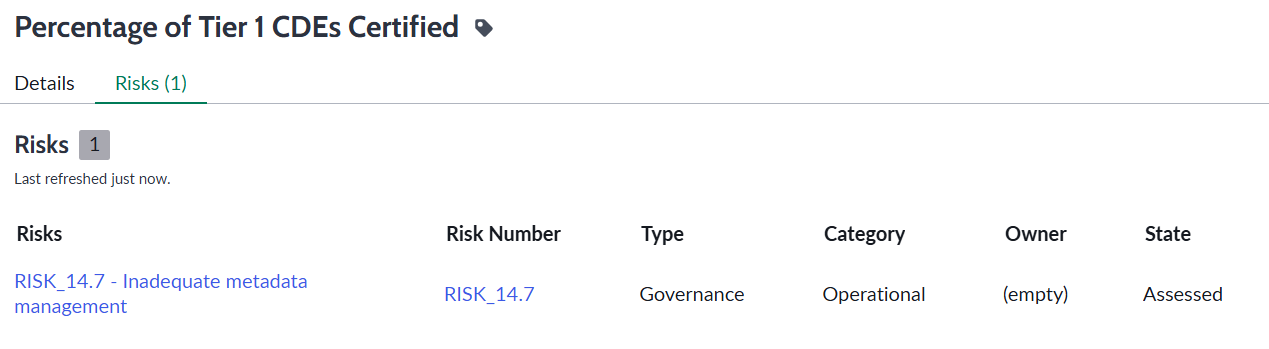
Automating KRI Source Data
The source data for individual KRIs should ideally be sourced in an automated manner. For example, the percentage of Tier 1 / 2 / 3 Certified CDEs is sourced from the TIER_STATUS_SCORE_VIEW in Tavro Lens (Snowflake).
Tavro Lens also showcases the lineage from the CDE table in Tavro Lens.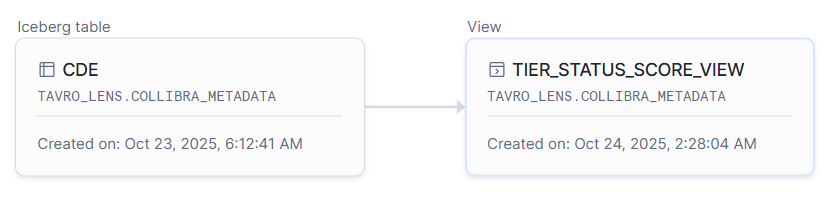
Finally, the actual source data for the CDEs is based on metadata from Collibra.