Tavro previously announced the Agent Metadata Specification as an open source project on GitHub. In this blog, we will discuss how the Agent Metadata Specification extends Google’s A2A protocol.
Google Agent2Agent (A2A) Protocol & Agent Card
The Google Agent2Agent (A2A) is an open protocol that provides a standard way for agents to collaborate with each other, regardless of the underlying framework or vendor. Agents can advertise their capabilities using an “Agent Card” in JSON format, allowing the client agent to identify the best agent that can perform a task and leverage A2A to communicate with the remote agent.
The Agent Card lays the operational foundation for agents to find each other, understand basic capabilities (modalities), and handshake for collaboration.
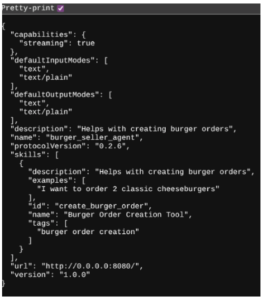
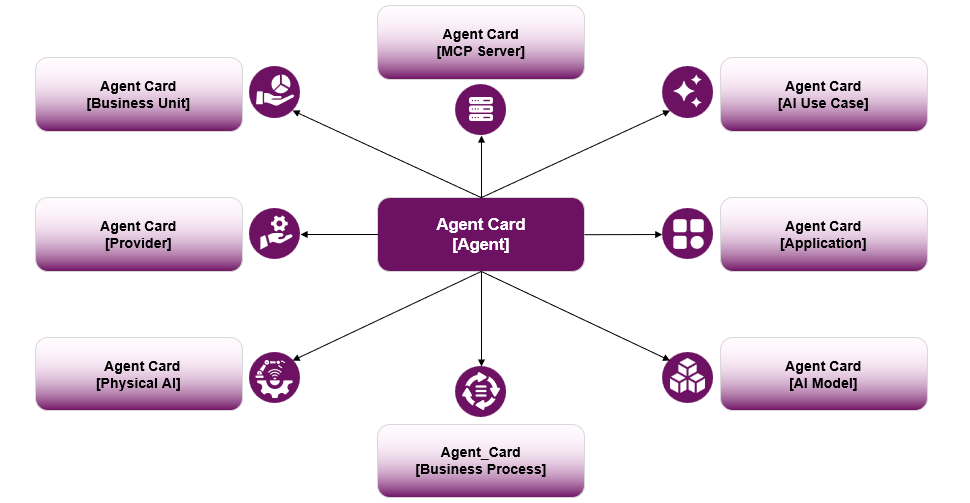
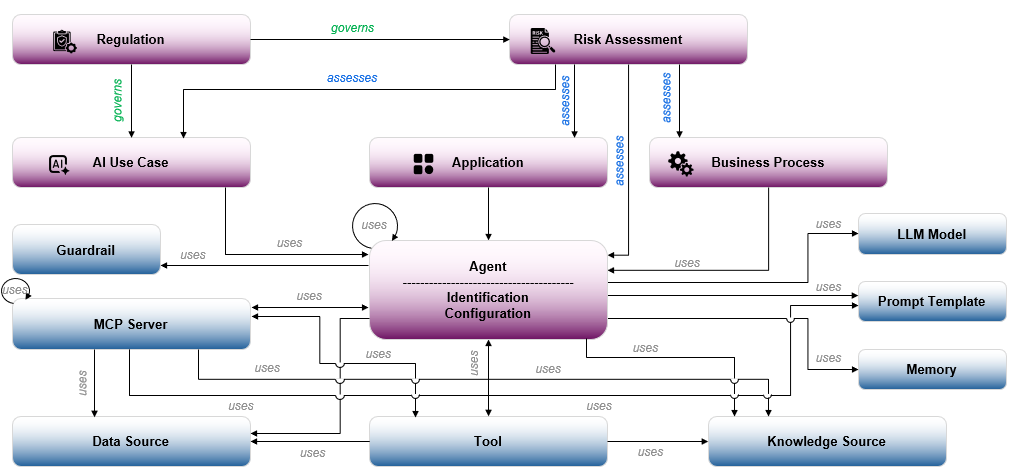
However, the Agent Card does not address business context, risk management, and governance. The Agent Metadata Specification seeks to enhance the Google Agent Card to address these additional topics.
A2A Agent Card with OOTB Attributes Only
Here is an example of an A2A Agent Card for a simple Fraud Detector agent with out-of-the-box (OOTB) attributes only. This Agent Card only supports basic attributes to support agent-to-agent communication without regard to agent risk.
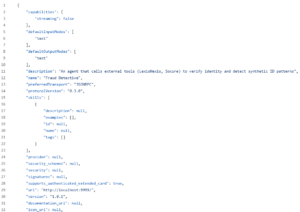
A2A Agent Card with Extended Authenticated Attributes Such as Tool Usage
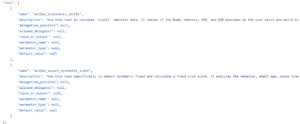
The A2A protocol also supports Extended Authenticated attributes. Here is an example of the A2A Agent Card for the Fraud Detector agent with Extended Authenticated attributes based on the Agent Metadata Specification. This agent card supports robust agent risk assessments. For example, the agent card shows that the agent uses the action_lexisnexis_verify and action_socure_synthetic_score tools.
However, due to the sensitive nature of the agent metadata, this agent card requires specific authentication.